Working Principle of Synchronous Motor: Stator, Rotor & Synchronism
Understand the working principle of synchronous motors with stator field, rotor excitation, synchronism with AC frequency, and common start techniques.
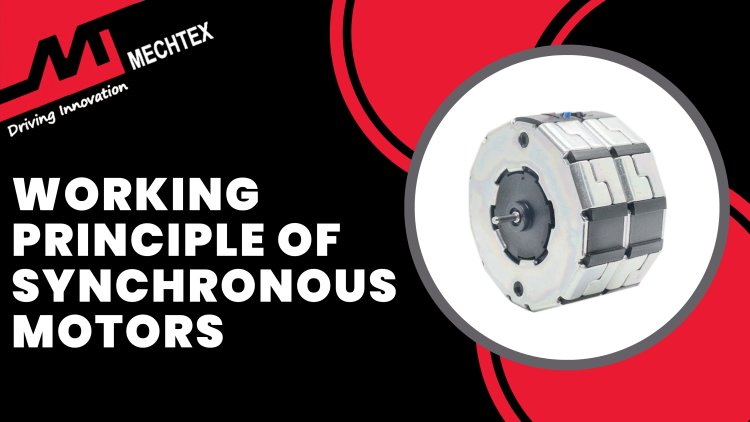
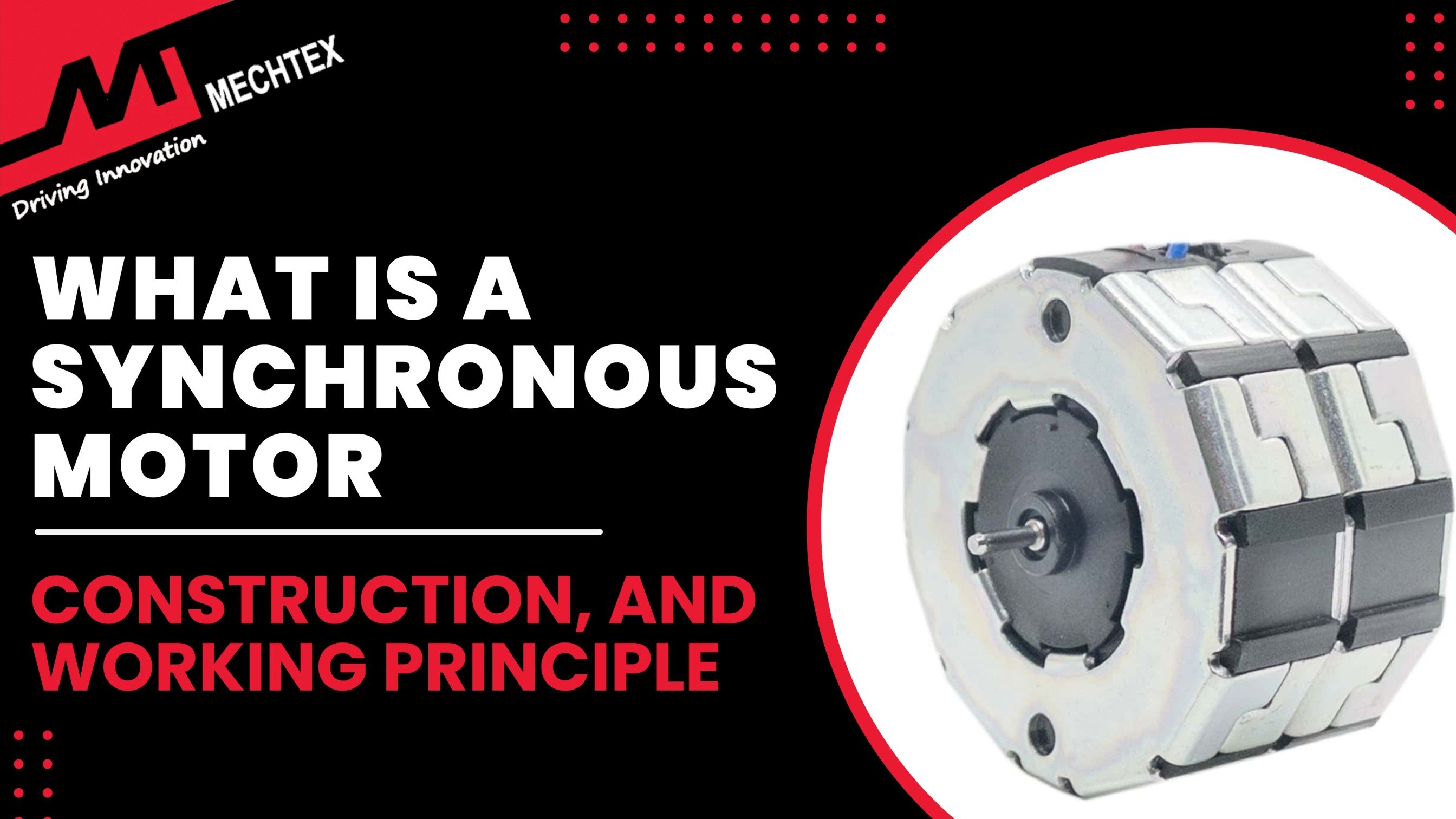
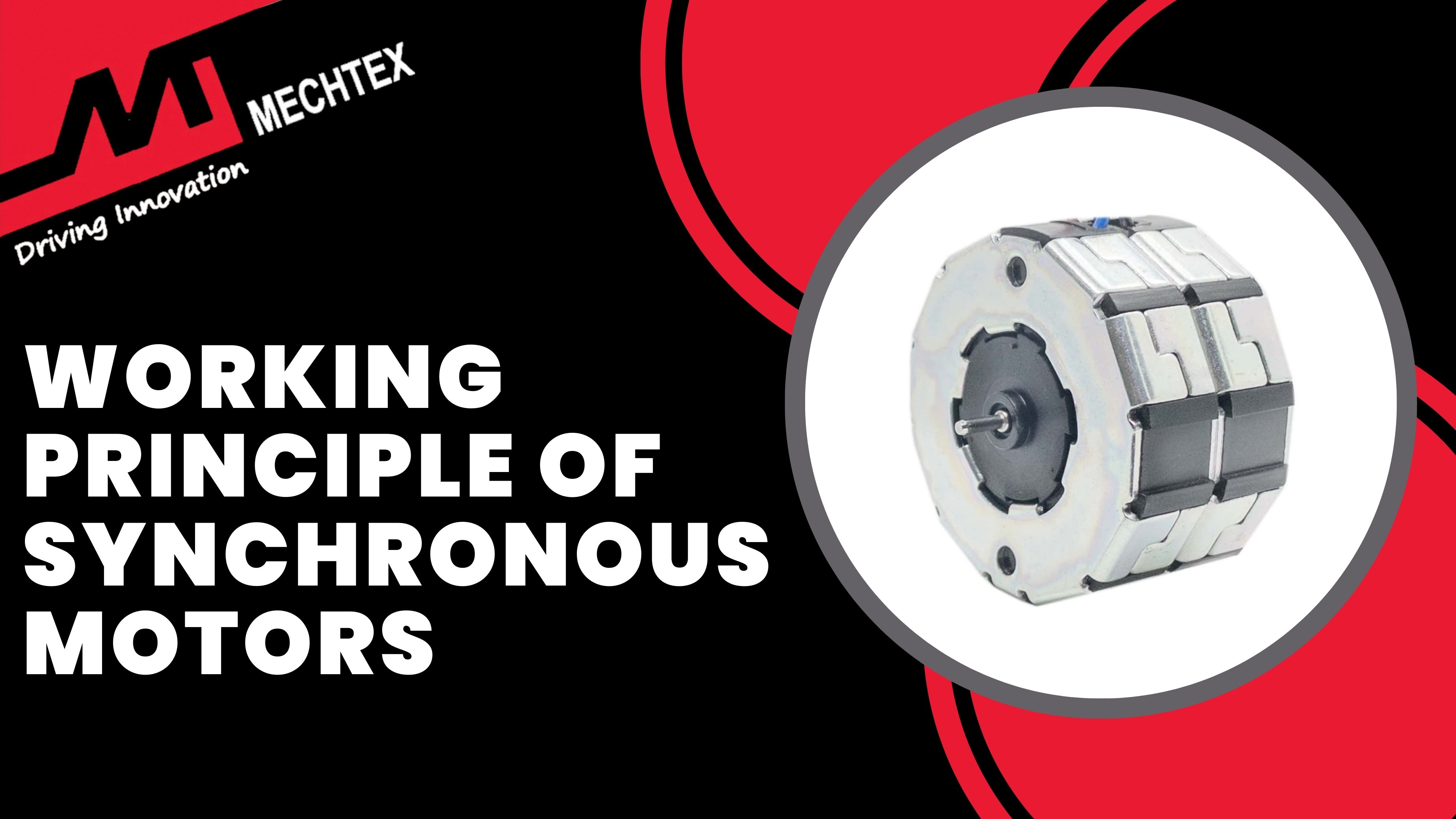
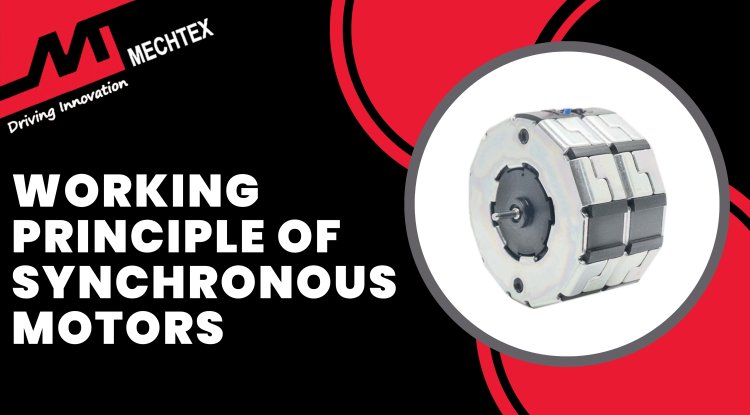
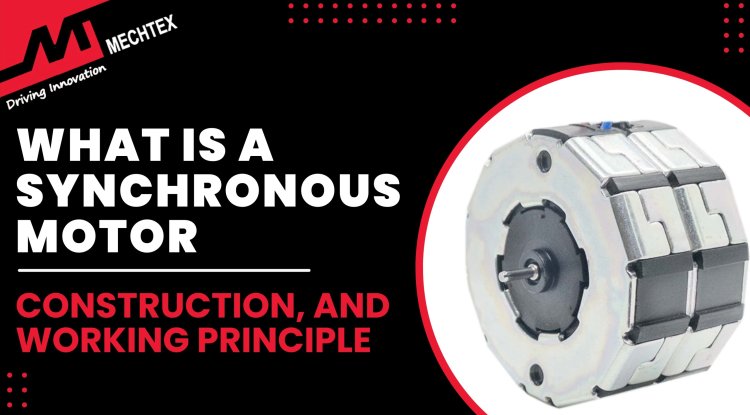
A synchronous motor is an AC motor that rotates its rotor at a constant speed. Its speed is synchronised with the frequency of the power supply. It converts electrical energy into mechanical energy and is commonly used in constant-speed applications.
In this blog, we will explore the working principle of synchronous motors and their applications across various industries. It will help you understand how a synchronous motor works and maintains constant speed throughout operation.
Synchronous Motor Working Principle
Synchronous motor working principle is based on the interaction between the magnetic fields of the stator and rotor.
When AC power is supplied to the stator windings, it generates a rotating magnetic field (RMF). The RMF moves at a constant speed and is synchronised with the frequency of the power supply.

The rotor has its own magnetic field, produced by supplying DC power to the windings. When the stator’s magnetic field rotates, it interacts with the rotor's magnetic field and pulls the rotor with it.
Once the rotor matches the speed of the stator’s magnetic field, both fields lock together and rotate at the same speed.
Synchronous Speed (50 Hz and 60 Hz)
Synchronous speed is the speed at which the rotating magnetic field of the synchronous motor rotates. It depends upon the frequency of supply and the number of poles. It does not change with load. The formula is
Ns = 120 x f/P
Where:
- Ns = synchronous speed (in rpm)
- f = supply frequency (in Hz)
- P = Number of Poles
As supply frequency differs in every country, the same motor runs at different speeds on 50Hz and 60Hz. India and Europe use 50Hz frequency, while the USA uses 60 Hz frequency.
| Number of Poles | Speed at 50 Hz | Speed at 60 Hz |
|---|---|---|
| 2 | 3,000 rpm | 3,600 rpm |
| 4 | 1,500 rpm | 1,800 rpm |
| 6 | 1,000 rpm | 1,200 rpm |
| 8 | 750 rpm | 900 rpm |
Example 1 - A 4-pole synchronous motor runs at a 50 Hz supply frequency. Synchronous speed - 120 x 50/4 = 1500 Rpm
Example 2 - A 6-pole synchronous motor runs at a 60 Hz supply frequency. Synchronous speed - 120 x 60/6 = 1200 Rpm
Once the rotor locks into the rotating magnetic field, it runs at the same speed. The speed changes only if the supply frequency changes or if the number of poles is different.
Synchronous Motor Applications
Synchronous motor are used in a machine which, run at a constant speed or require power factor correction. Common applications include compressors, pumps, fans, rolling mills, textile machinery, and condensers.
| Industry / Use | Application | Why a synchronous motor is used |
|---|---|---|
| Industrial plants | Compressors (reciprocating and centrifugal) | Constant speed under heavy, steady load, and power factor improvement |
| Water and utilities | Large pumps | Efficient continuous operation and fixed flow rate |
| HVAC and ventilation | Fans and blowers | Steady speed and good efficiency in long running hours |
| Metals and mining | Rolling mills, ball mills, crushers | High torque at constant speed for heavy-duty loads |
| Paper and textile | Paper machinery, synthetic fibre and yarn lines | Precise, constant speed needed for uniform product quality |
| Power systems | Synchronous condensers | Run without mechanical load, with the field over-excited, to supply reactive power and support grid voltage |
| Power generation | Motor-generator sets | Stable speed for frequency conversion |
| Timing and control | Timers, clocks, small automation mechanisms | Speed locked to the mains frequency gives accurate timing |
| Automation and robotics | Permanent magnet synchronous motors (PMSM) | Precise speed and position control with drives |
| Electric vehicles | PMSM traction motors | High efficiency and power density |
Synchronous Condenser - Power Factor Correction
An over-excited synchronous motor running without a load behaves like a capacitor. It supplies reactive power to the grid and improves the power factor. Therefore, it is called a “synchronous condenser” and is used in large industrial plants.
Small Synchronous Motor
Not all Synchronous Motors are large. Small synchronous motors run directly on AC supply and are used in timers, pumps, and automation mechanisms where constant speed matters more than power.
Frequently Asked Questions (FAQs)
Q1. Is a synchronous motor AC or DC?
Ans - A synchronous motor is an AC motor. Its stator runs on an AC supply and creates a rotating magnetic field. Some types of AC motors use a DC supply to excite the rotor, but it does not run the motor.
Q2. What is synchronous speed in a synchronous motor?
Ans - Synchronous speed is the speed at which the rotating magnetic field of the synchronous motor rotates.
It is calculated as Ns = 120 x f/P, where f is the frequency of supply, and P is the number of poles. For example, a 4-pole synchronous motor runs at a 50 Hz supply frequency; the synchronous speed will be 1500 Rpm (120 x 50/4).
Q3. How does a synchronous motor start?
Ans - A synchronous motor is not self-starting. It requires an external motor to reach the synchronous speed of the stator.
It is started as an induction motor, using damper windings and then brought the rotor to synchronous speed with a pony motor. The rotor then locks itself with the rotating magnetic field and rotates at constant speed.
Q4. What are the types of rotors in a synchronous motor?
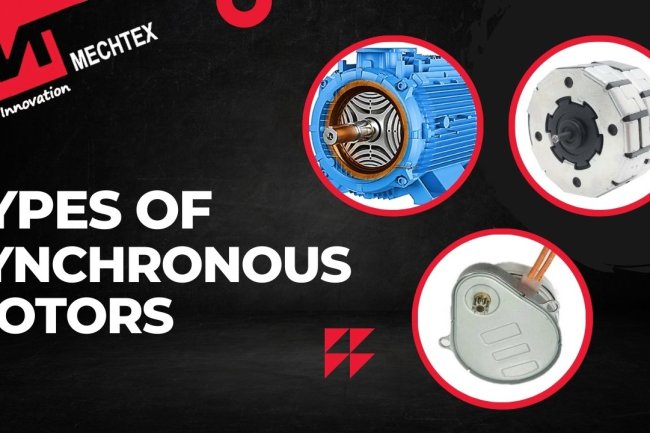
Ans - Synchronous motors have two types of rotors: Salient Pole rotor and Non-Salient Pole rotor.
Salient pole rotors have projecting poles and are used for low-speed applications. Non-salient pole rotors have a cylindrical surface and are used for high-speed applications. Read more for types of synchronous motors.
Q5. What is the difference between a synchronous motor and an induction motor?
Ans - A synchronous motor runs at a synchronous speed, while an induction motor runs at a slightly lower speed. A synchronous motor needs a DC supply for excitation, and an induction motor induces current in its rotor and does not require excitation.
Other Related Blogs